

The mentions of specific brands in this article are the opinion of Claire Nightingale and do not reflect the opinions of Dentex as a company.
For award-winning Orthodontist Claire Nightingale, the future is clear. We sat down with Claire to hear her opinion on why she’s pivoted her practice to treat predominantly with Invisalign and has seen huge success for her patients, her team and her business. By splitting her time between private practice at Queens Gate Orthodontics and her role as an NHS Consultant at Watford General Hospital, Claire has a broad view of the orthodontics industry and the challenges it faces. She’ll be one of our hosts at our upcoming Dentex Ask The Specialists Networking event and speaking at the British Orthodontic Conference; at the latter, she’ll be presenting a lecture on treating teenagers with Invisalign and Dental Monitoring. Here, she tells us why.
Is there a reason you’ve chosen to specifically focus on teenagers for the British Orthodontics Conference?
I’ll be lecturing to the orthodontic therapists in their parallel sessions. I wanted to focus on the treatment of teenagers using Invisalign because I’m aware that many who work within the NHS have little opportunity to see firsthand the results that can be achieved with Invisalign for teenagers. It’s only in a private practice setting where they’re going to see that. In general, I find that Orthodontists tend to be unconvinced about the merits of treating people with plastic clear aligners. I’m very enthusiastic about Invisalign and when I share my enthusiasm with my peers, I face a lot of sceptical reactions: some think it’s not proper orthodontics unless you’re doing it with brackets and wires. I want to show people that treating teenagers to a high standard and with some quite difficult malocclusions, is very achievable with Invisalign.
Why do you think some are reluctant to consider Invisalign?
The vast majority of orthodontics is delivered under the NHS and the NHS is not going to pay for Invisalign. If you’re working in a busy NHS practice, then you may not have time to talk to people about alternatives or to consider suggesting private treatment. If you’re in an environment where you expect most people to reject the idea anyway, then why would you even initiate that conversation and slow your work down or face hostility for suggesting paid treatment? I’m in a lucky position, where I have two different parts to my working week. I’m in private practice at Queen’s Gate Orthodontics, where people come expecting to pay, which means I can offer them everything. I work in the NHS as a Consultant Orthodontist at Watford General Hospital, where treatment is covered by the NHS, but all I can offer are traditional metal braces or functional appliances – so I see both sides of orthodontic provision.
How has Invisalign changed your practice?
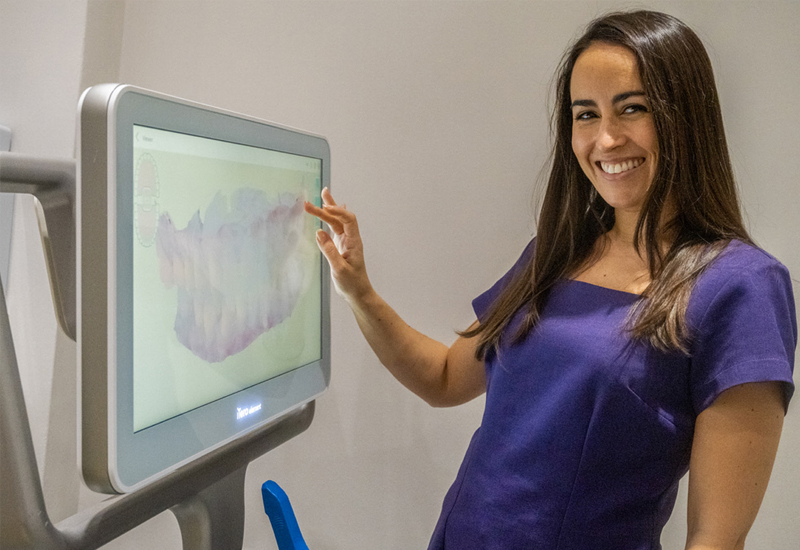
After the pandemic, I decided to encourage all patients who could be treated with Invisalign to do so. It was very clear to me that the way forward was Invisalign and remote monitoring. I recognised it offered more convenient treatment for patients, yet achieved great outcomes and minimised the time that they had to come into practice. That was in July 2020, and now three years later I’ve been able to audit the results of what we’ve achieved. I plotted my turnover year-on-year from the day I bought the practice in 2013 and I analysed patient attendance for fixed adjustments and Invisalign adjustments. In 2019, when I was treating most people with fixed braces, we had a big hike in turnover, but also a big hike in patient attendance and I had to employ two extra people. By 2021, we’d had another big hike in turnover, but patient attendance had dropped significantly since 2019. Compared to 2013, our turnover increased by 112%, but patient attendance had only increased by 1%. We now generate more money but have to see fewer patients in the practice for routine appointments. In 2019 we worked harder but in 2021 we worked smarter because we’d engaged with Invisalign and Dental Monitoring. The trend continued in 2022.
How do you think Invisalign will impact orthodontics in the future?
A few years ago at a clinical meeting, Invisalign shared their ambition that 50% of people having orthodontics will be treated with clear aligners and I think that’s a very realistic target. I believe if you’re not engaging with that journey, then you risk being left behind. The majority of Invisalign treatment is done by general dental practitioners, and I worry about the impact this might have on young orthodontists in training. In my role as a Consultant, I see young people training to be orthodontic specialists and I worry that their futures will be dominated by treating teenagers with metal braces, which is hard, demanding and difficult work. These specialists risk being left behind because they’re not having exposure to treating patients with Invisalign. I try to open the eyes of the young people that I mentor and tell them that this is my present, and it will be a huge part of their future. My motivation is to encourage people coming behind me to see what the future is like so that they will engage with it.
What do you see as the key positives of Invisalign for patients?
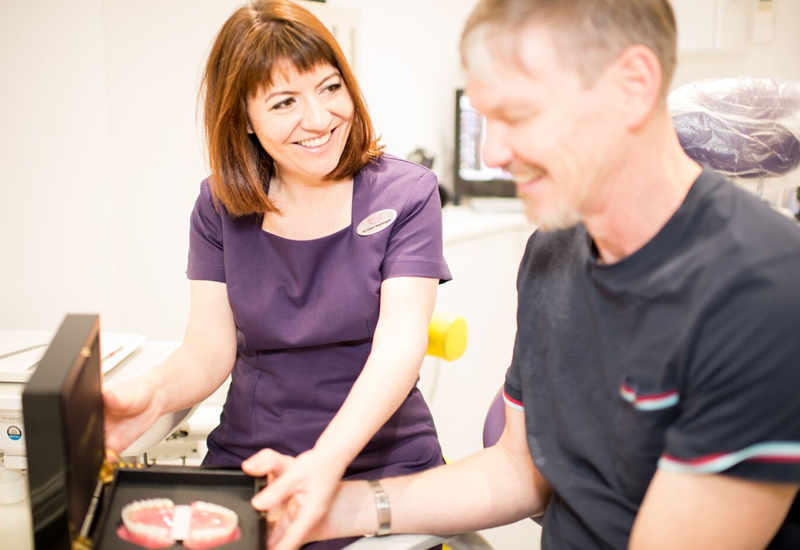
No unscheduled SOS appointments, with irritating breakages; it’s easy to maintain good dental hygiene; convenience with limited need to attend for adjustments; aligners are comfortable to wear and their aesthetics don’t knock patients’ confidence. An example of this is a recent conversation with the mother of one of my patients who shared that whilst her son has had orthodontic treatment with Invisalign, her nephew had treatment with traditional metal braces. Her son has had no deleterious impact on his confidence at all and has received a standard of care that’s probably better than we would have achieved with a fixed brace, while her nephew’s confidence has absolutely plummeted.
What do you consider to be cons to Invisalign?
There are two key restraining factors. One is whether the malocclusion is amenable to being treated with Invisalign. The second is compliance: will the patient wear them? My experience is that they do and will and that teenagers are very keen on treatment.
Do you think that the advent of clear aligners has expanded the range of people who are open to orthodontic treatment?
Without a doubt. The age range of people that I’ve cared for using Invisalign has been eight to 81. It’s certainly made people more accepting of having treatment. Just today I had a patient in his 60s who needs his upper incisors intruded so he can restore his worn incisal edges. There’s no way I’d have treated him with fixed braces, but we’ve used Invisalign and he’s really happy with the results. He’s an orthodontic convert and that’s really exciting to me. I’m doing some complex cases with Invisalign: I’m working with restorative dentists to prepare people for implants; I’m doing jaw surgery cases and wear cases and I’m treating teenagers to a higher standard than I would probably achieve with fixed braces.
Why is Dental Monitoring so important?
Dental Monitoring enables us to take better care of our patients by getting weekly updates on their progress without the burden of them having to come in; it’s a win-win for all. Dental Monitoring allows me to see treatment progress very clearly and flags up problems immediately. Artificial intelligence (AI) has a sharper eye than I have. For example, if an attachment comes off (the blobs of glue we add to a patient’s teeth with Invisalign treatment), the AI picks this up, while I’d have to manually count every tooth and attachment to be confident they were all still there. Dental Monitoring also covers the ‘nag factor’: if somebody isn’t cleaning their teeth well, the AI will tell them. Plus the patients are now getting a more bespoke treatment. Pre-Dental Monitoring, we would tell patients to change aligners every two weeks. Now, we use the monitoring to indicate if they can actually change them earlier, as progress has been good, or ask them to wear them longer. So in every way, AI is improving the quality and efficiency of patient care and improving the outcome of treatment. In addition, it makes my working life easier to manage, because, as we don’t need as many staff to treat the volume of patients, we can manage obstacles outside of our control, such as train strikes and jury service, more easily.
What development do you hope is next for Invisalign and the industry?
I want the industry to focus on the environmental consequences of Invisalign because it comes with a big plastic waste issue. For every aligner that’s generated, there’s also a resin model, so the carbon footprint is dreadful. And it comes with excessive packaging; it’s packaged as a premium product, which in my view is pointless because the patient’s already invested in the product before it’s delivered. I raised this at the Invisalign Summit in May, and also have recently had a letter published in the British Dental Journal. We need to understand how we can recycle this product and reduce packaging because we can’t talk about taking great care of adolescents and then at the same time destroy the planet. I think Corporate Social Responsibility should become a competitive point between aligner suppliers. It’s hard to imagine that another product will rival Invisalign in the technical delivery and software treatment planning. However, if others start to promote their brand on environmental sustainability then I think that could become really interesting.
To what do you attribute the success of your practice?
Someone once told me the secret to success was ‘just taking good care of your patients’. Our practice is a very patient-focused environment: we strive to make sure people are cared for properly, as opposed to how much profit we make. The former leads to the latter. We’re also a lateral practice, rather than a top down. We’re a very strong team and enjoy working together. Everybody’s very conscientious about the role they play within the practice, and (I hope) everybody feels equally important. I think success has to be a triad. To take care of patients we also have to take care of one another and we have to take care of the business. While they don’t require equal attention, each needs thought and dedicated time. If you take one of those things out of the equation, then the whole triangle collapses.
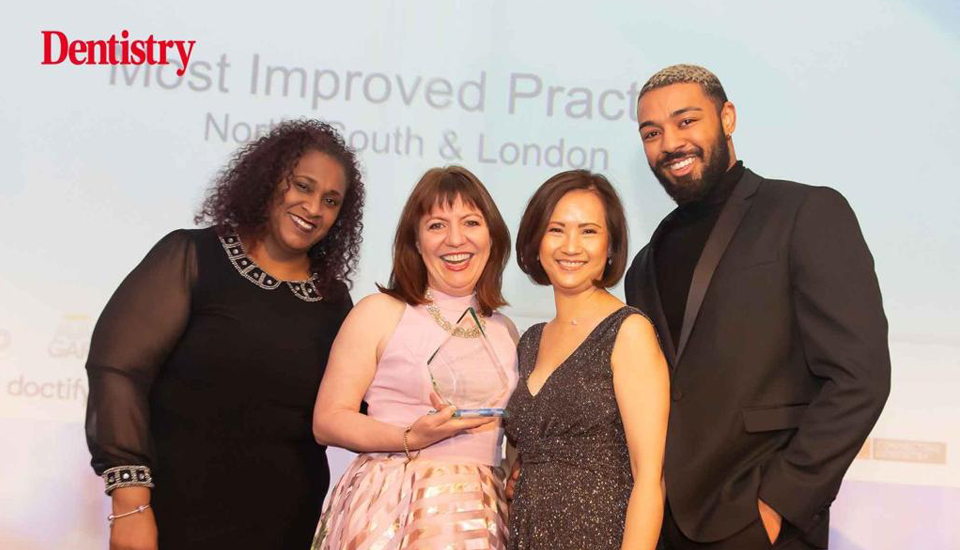
For those seeking to learn from Claire’s experiences and expertise, her appearances at the upcoming events—Dentex and Portman Dental Care’s ‘Ask The Specialists’ networking event and the British Orthodontic Conference—offer unparalleled opportunities. Whether you’re a seasoned practitioner or an aspiring orthodontist, engaging with Claire’s insights promises to provide a deeper understanding of the transformative potential of Invisalign and the future of orthodontics.
If you are looking for top-notch orthodontics in the heart of London check out Claire’s practice Queens Gate Orthodontics. To get in touch email them at [email protected] or call on 020 7373 0176.