

To celebrate International Youth Day, we’re shining a light on The Dental House in Liverpool, which has developed a successful dental health campaign for local schools. Lyndsey Ollerhead, who is Scan and Screen Co-ordinator at The Dental House, tells us how her team created the programme, which elements have proved particularly surprising, and why she feels it’s important for practices to get involved in educating children.
How did you get involved in the programme?
I was a DCP (Dental Care Professional) champion up until COVID hit and used to go into children’s centres to deliver health and education support for young mums and I’d also go into practices to do training. I’d worked in dentistry for 25 years and a large part of that was within the NHS. I saw how important oral health education and intervention was, particularly in deprived areas – it’s always been something I’ve been passionate about. I teamed up with our line manager Kerry and we reconsidered the Outreach programme we’d been taking into schools, finding ways to make it more engaging by adding in fun activities and goodie bags.
Which age group have you been teaching?
Year four. We’ve had lots of interest in creating lessons for under 5s, which I’d love to develop. I think starting oral health lessons for early years children is really important.
What do you cover in the lessons?
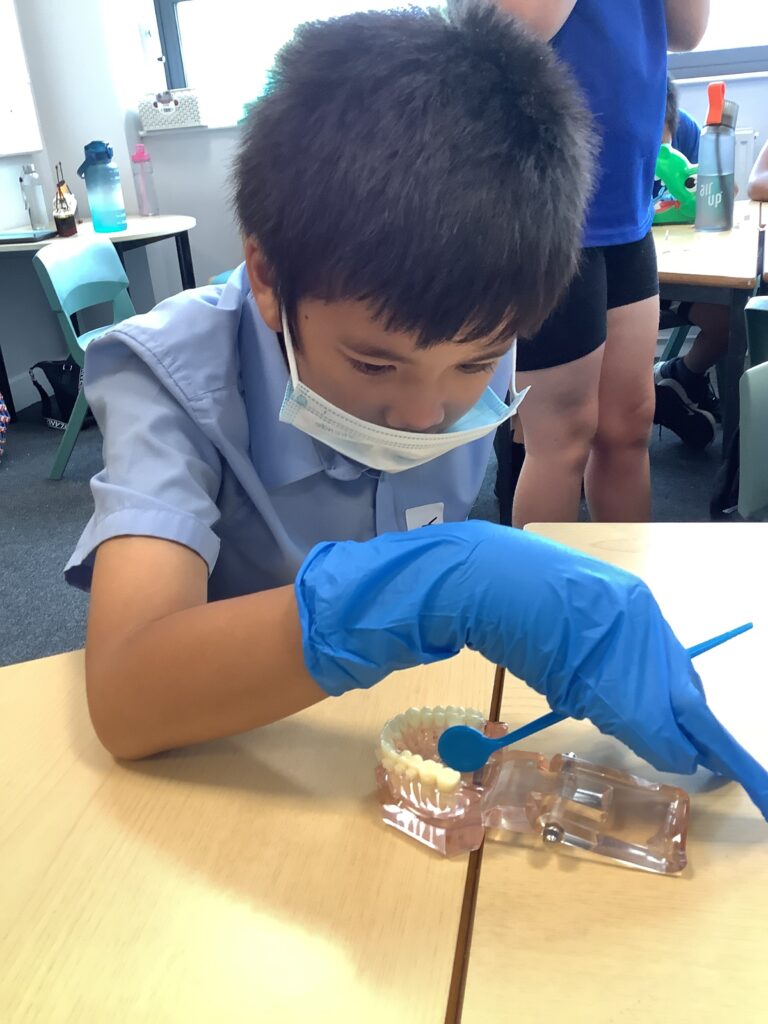
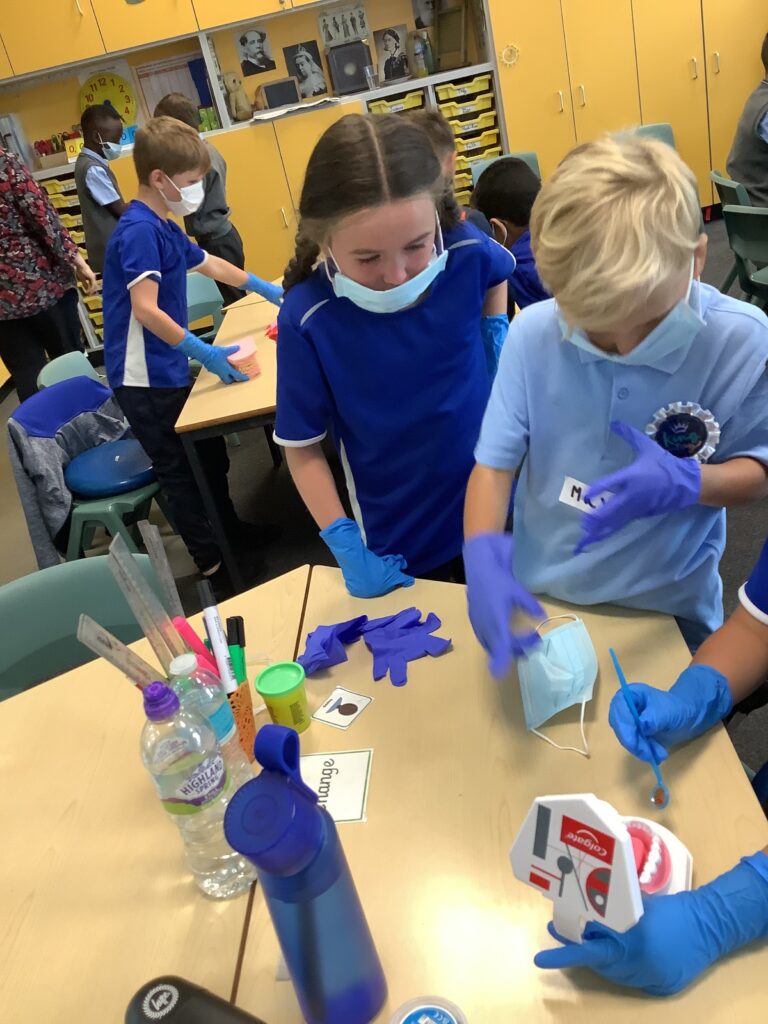
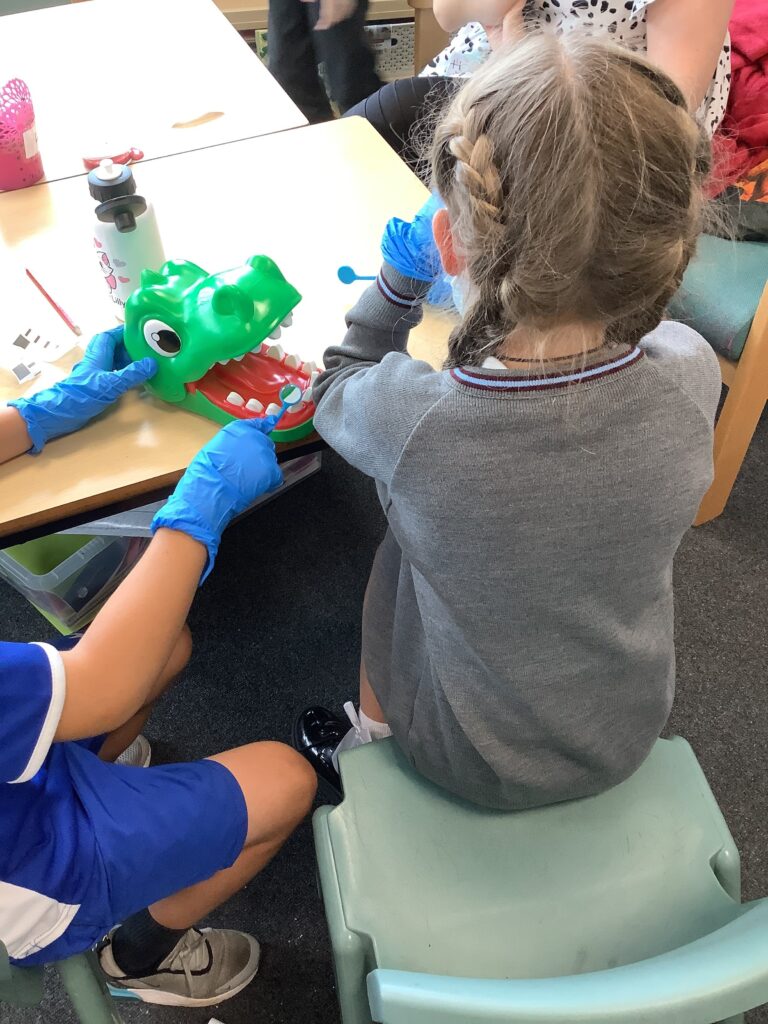
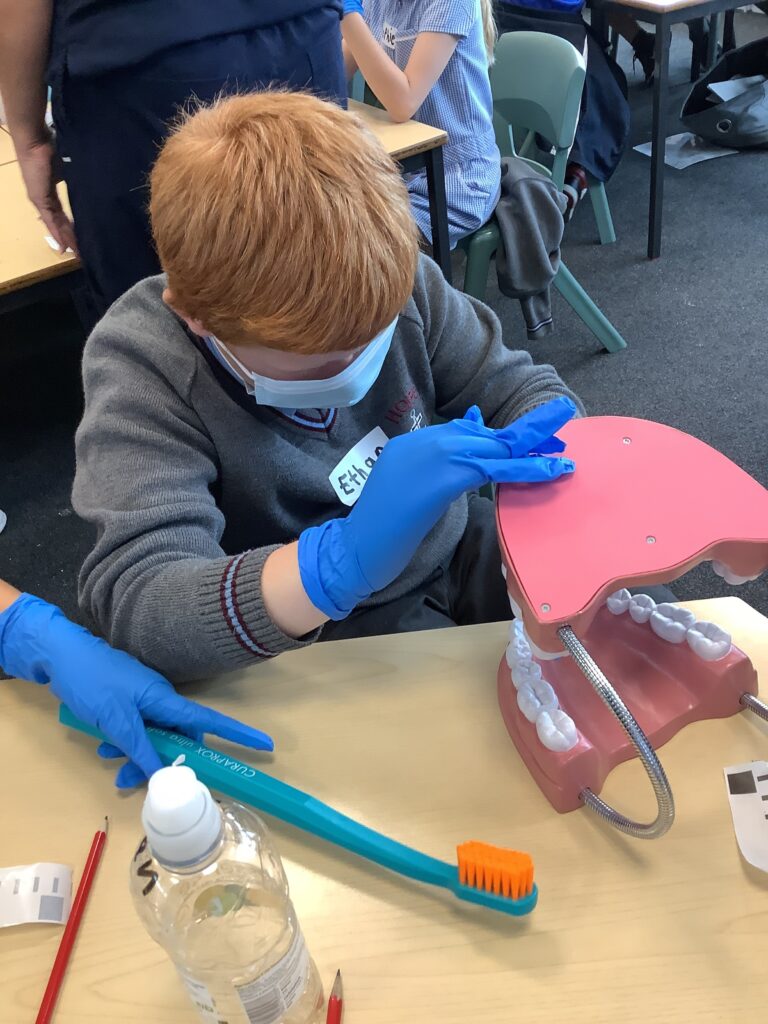
In year four they do cover oral health as part of the curriculum, but there’s a lot the children aren’t aware of – such as brushing techniques (making sure they’re spending two minutes a day brushing), using the toothpaste with the right fluoride content, morning and night brushing and also making sure they don’t rinse when they brush their teeth, so they leave a coating of fluoride. We also discuss the morphology of the tooth by inviting the kids to be a dentist – trying on masks and gloves and having little mirrors. We educate children on sugar intake and how to make healthier choices: swapping foods is an important element and showing them how to be mindful of how much sugar is in certain foods.
What do you include in the goodie bags?
We wanted to make sure every child has a toothbrush – unfortunately, there are children who don’t. We go into schools, and there are children, aged eight or nine, who’ve never been to the dentist. The goodie bag has a toothbrush, toothpaste, a two-minute egg timer, a brushing chart, stickers and a small toy: it’s amazing to see how excited the children are to receive this. If children go home excited about brushing their teeth, hopefully, parents try to make it a high priority, too. I also put in educational resources for the parents to read and information about our practice and the memberships, which include children on the NHS, to try to help inform parents.
Do you enjoy the sessions?
Yes. I love how the kids are engaged and come up to thank you at the end. And the teachers offer really great feedback. I think it’s making a real difference in the community and I love getting the chance to help.
What are the children typically most surprised by?
We show them how much sugar is in certain drinks. We take popular drinks and then I get the children to guess how many sugar cubes are in each one. They are always shocked by the amount in flavoured bottled water – it’s a real eye-opener. The council also contacted us about our scheme and asked if we’d include cereal and yoghurts, so we incorporated those as well, to offer education on healthier options. We hope to make the children a little more aware of what they’re eating. The daily sugar intake for a child aged eight or nine should be six cubes at the most: we show the children that many of them can consume this in one meal alone.
Do you think there should be more oral health education in schools?
There’s definitely not enough funding or education out there. We need to start from a young age and make it a priority in schools. Most children have to wait until year four until teeth is on the curriculum and taught in schools. There would be so much benefit starting earlier.
What would be your advice for other practices considering working with schools?
For the person doing the sessions, it can be really rewarding and a fantastic extra element to their role. It’s also rewarding for the practice, not only from the great feedback but in how you want to make a difference in your community. We want to show we’re a practice that cares about people, and it’s not just about ‘before and after’ smile makeovers – we don’t want to just promote ourselves to those who can afford treatments. We want to show how important it is to us to prioritise patient care and make a real difference, and that we are a family-friendly practice for all.
The dental health campaign developed by The Dental House in Liverpool is a shining example of the importance of teaching about teeth and oral health in schools. Led by Lyndsey Ollerhead, the Scan and Screen Co-ordinator, this program has successfully engaged with local schools to provide essential oral health education to young children. Teaching about teeth is not just about promoting a healthy smile; it’s about nurturing a culture of oral health awareness and care that will benefit generations to come. The dedication of The Dental House team in Liverpool serves as an inspiring model for other dental practices to follow, and together, we can build a brighter, healthier future for our youth.
If you’re looking for a family or cosmetic dentist in Liverpool you can give them a call on 0151 228 3643 or find out more at dentalhouseliverpool.co.uk.